About
Surgery is the oldest cancer treatment — and the least quantified. I'm an engineer who became a cancer surgeon to change that.
I trained in electrical engineering before medical school, and I've spent my career bringing measurement, robotics, and now AI into the operating room — the place in cancer care where the stakes are highest and the data is thinnest.
The problem that drives me is simple to state. When my group analyzed 6.5 million cancer operations nationally, oral cavity cancer had the highest positive-margin rate of any major cancer affecting both men and women — meaning too many operations still leave tumor behind, with real consequences for patients. Better information at the point of surgery means better decisions, and better decisions mean better outcomes.
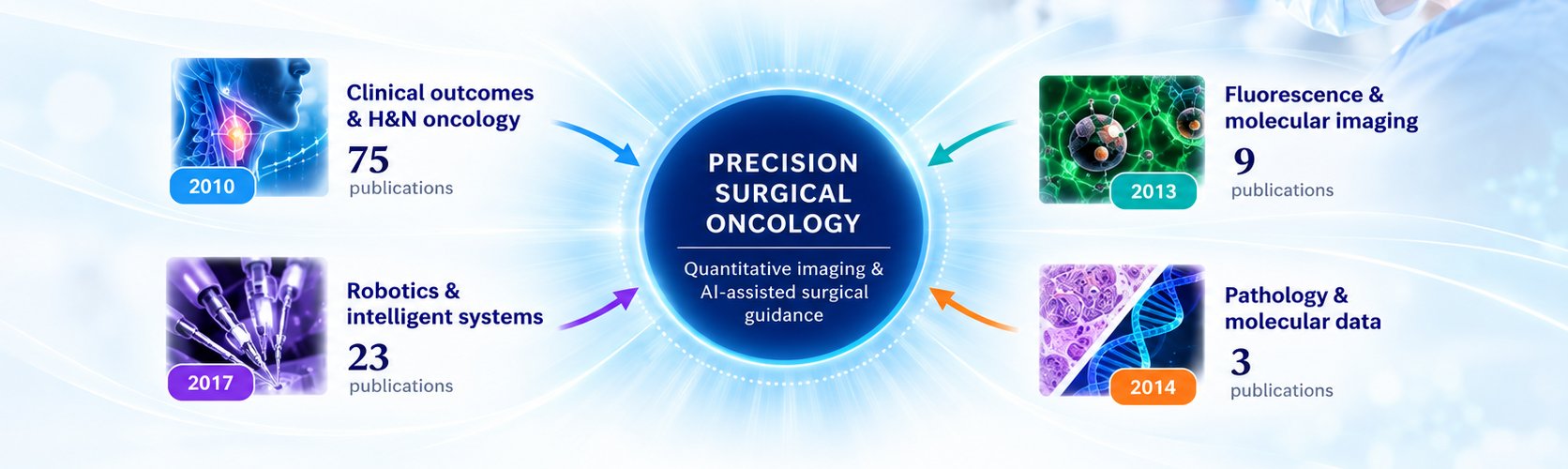
That conviction has taken me from the fluorescence-guided surgery lineage of Nobel laureate Roger Tsien to serving as national and site PI on all three pivotal trials of intraoperative fluorescence-guided nerve visualization — the Phase 1/2 study and both Phase 3 trials, completed in 2025, with the Phase 1 results published in Nature Communications. My translational robotics work with engineering collaborators spans tissue modeling, deformable navigation, and surgical AI, with 110 publications across medicine and engineering journals.
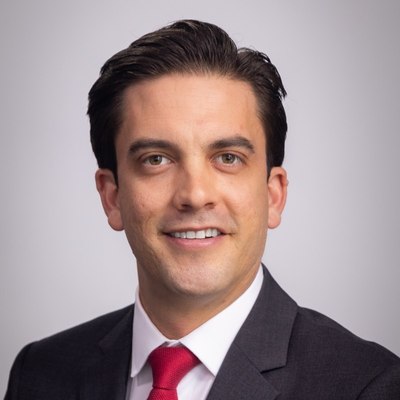
Clinically, I'm a head and neck surgical oncologist and microvascular reconstructive surgeon at the University of New Mexico, my home state, where I serve as Associate Professor with Tenure, care for patients with complex head and neck tumors, and train the next generation of surgeon-scientists.
The through-line in everything: every surgery is a data-generation event. The future of surgical oncology is quantitative — and I intend to help build it.
(Also: I grow agave.)
Download CV (PDF)